Ahmia: Best Dark Web Search Engine in 2026.
2/03/2026
Category: Trending
Category: Trending · Privacy & Cybersecurity
In 2026, as dark web scams, phishing schemes, and AI-generated traps keep increasing, the Ahmia Dark Web Search Engine emerges as the safest and most reliable option for navigating public .onion services. Unlike other uncensored engines, Ahmia prioritizes harm reduction, ethical exploration, and legitimate research purposes.
Endorsed by the Tor Project since 2014 and consistently ranked #1 or “safest overall” in 2026 cybersecurity reviews, Ahmia has become the preferred search engine for journalists, OSINT analysts, security teams, and beginners seeking reduced exposure risk.
What Is a Dark Web Search Engine and How Does It Work?
A dark web search engine is a unique tool crafted to discover and catalog hidden websites on the Tor network, particularly those that end with .onion. These sites can't be accessed through regular browsers and aren't indexed by Google or any other search engines on the surface web.
Because of this, dark web search engines help users discover content within encrypted, privacy-focused networks that would otherwise be difficult to navigate.
Unlike surface web search engines, dark web search engines require the Tor Browser and are built to prioritize anonymity, encryption, and protection from tracking. Popular examples include Ahmia and Torch.
Key Features of Dark Web Search Engines
- Tor-Based Access: Designed to function exclusively within the Tor network
- Hidden Site Indexing: Crawls and catalogs unindexed
.onionwebsites - Anonymity Protection: Encrypts traffic and masks user identity
- Decentralized Structure: Often community-run with no single centralized index
How Dark Web Search Engines Work
Dark web search engines operate similarly to traditional search engines but face unique technical and structural limitations.
- They use onion routing to encrypt and relay data through multiple Tor nodes
- They crawl hidden, unindexed content unavailable on the surface web
- Their indexes change frequently due to the unstable nature of dark web sites
As a result, dark web search results are often smaller and less consistent than those on the surface web. Despite these limitations, they remain essential tools for navigating the dark web safely and efficiently.
This article is for educational and cybersecurity awareness purposes only.
What Is Ahmia? Core Features in 2026
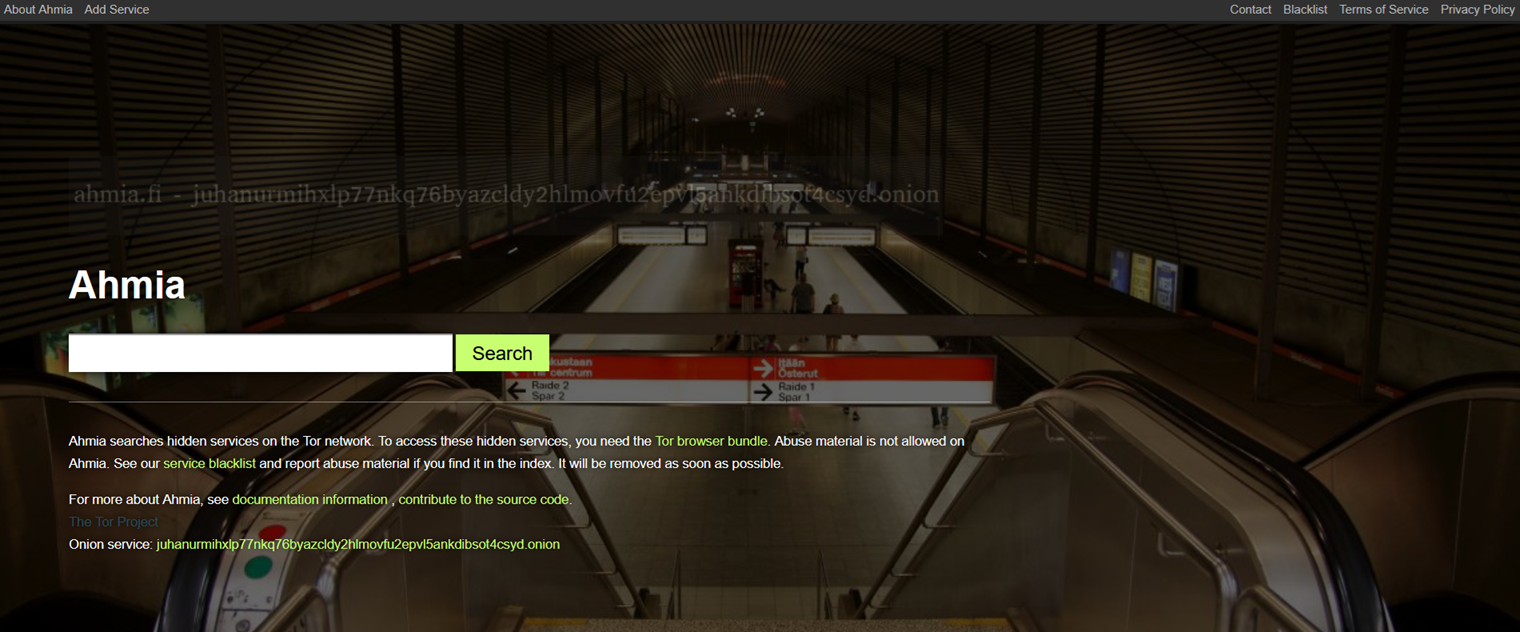
Ahmia is a Tor-compatible search engine that indexes public Tor hidden services while actively filtering abusive and illegal content. Created by Juha Nurmi during Google Summer of Code, Ahmia was designed to improve the usability and safety of Tor search.
Unlike many darknet search engines, Ahmia uses blocklists, user reporting, and ongoing moderation to remove content related to exploitation, fraud-heavy traps, and other high-risk categories. Its codebase is open-source, reinforcing transparency and trust.
| Feature | Description | User Benefit |
|---|---|---|
| Active Filtering | Blocks abusive and illegal categories | Lower exposure risk |
| Tor-Endorsed | Officially supported by Tor Project | High credibility |
| Open Source | Public codebase | Transparency & trust |
| Dual Access | Clearnet preview + Tor network | Flexible research workflows |
Why Ahmia Tops 2026 Rankings
In 2026 reviews by CloudSEK, Breachsense, Cyble, and DeXpose, Ahmia consistently ranks as the safest dark web search engine. Its emphasis on filtering and legitimacy aligns with modern threat intelligence and journalistic standards.
As AI-generated phishing sites and fake dark web forums increase, underground escrow abuse, Ahmia’s curated approach reduces accidental exposure while still enabling meaningful discovery. This balance makes it ideal for beginners and professionals alike.
Ahmia vs Other Dark Web Search Engines
| Engine | Filtering | Index Depth | Best For | Risk Level |
|---|---|---|---|---|
| Ahmia | Strong | Moderate | Safe research & beginners | Low |
| Torch | None | Very Large | Broad OSINT scanning | High |
| Torzle App | None | Low | Safe research & beginners | Low |
| Haystak | Moderate | Large (paid tiers) | Advanced users | Medium |
Risks and OpSec Best Practices
While Ahmia significantly reduces risk, no dark web search engine is completely safe. Malware, phishing, and legal exposure remain possible if users go beyond ethical research boundaries.
- Use only the official Tor Browser
- Enable the highest security settings
- Avoid sharing personal or identifying data
- Cross-check findings with trusted directories
- Maintain a strict research-only mindset
- Only visit verified vendors, markets and forum links
Conclusion: Why Ahmia Leads in 2026
Ahmia stands out as the top dark web search engine in 2026, thanks to its endorsement from the Tor Project, proactive filtering, and commitment to open-source transparency. While it may not have the extensive reach of some uncensored tools, its focus on safety perfectly aligns with the growing demands of users who prioritize privacy and security.
As dark web threats become more sophisticated, filtered discovery tools like Ahmia are no longer optional—they are essential.
Frequently Asked Questions
Is Ahmia safe to use in 2026?
Ahmia is considered the safest dark web search engine in 2026 due to active filtering and Tor Project endorsement, though all dark web use carries some risk.
What type of content does Ahmia filter?
Ahmia removes abusive and illegal categories, including exploitation material, using blocklists and community reports.
How is Ahmia different from Torch?
Ahmia focuses on safety and legitimacy, while Torch prioritizes maximum coverage with no filtering, resulting in higher risk.
Who should use Ahmia?
Ahmia is ideal for journalists, researchers, OSINT analysts, students, and beginners seeking safer onion discovery.
Is accessing Ahmia legal?
Accessing Ahmia is legal in many jurisdictions, but interacting with illegal content is not. Ethical and lawful use is essential.