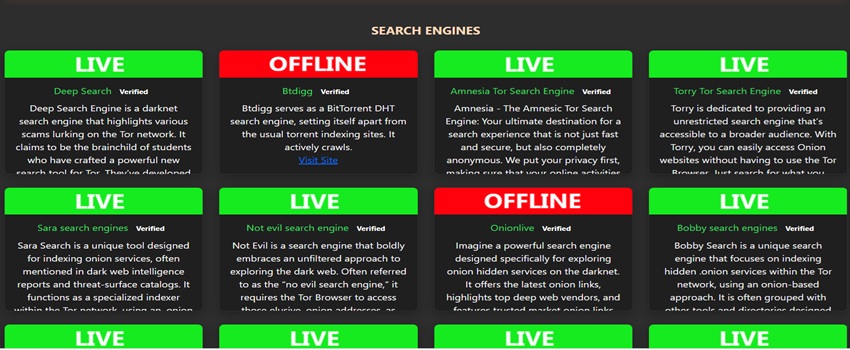
Dark web directories are organized resources that help people discover and navigate onion services. Unlike search engines, which return results for queries, directories organize resources into categories and provide a structured way to explore the onion web. This guide explains how dark web directories work, the different types of directories, how they differ from search engines and wikis, and how to evaluate directory information critically.
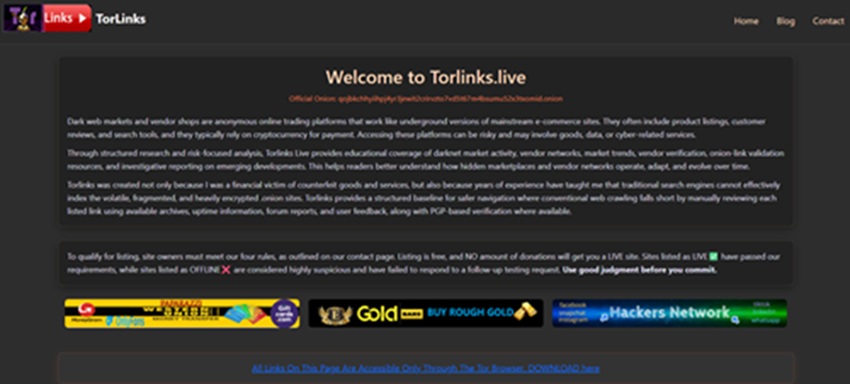
What Are Dark Web Directories?
A dark web directory is an organized index of resources available through the Tor network. Instead of requiring a visitor to know the address of a particular onion service, a directory groups resources into categories and provides a structured starting point for discovery.
Directories can cover many different types of onion services, including privacy resources, informational websites, communities, forums, search tools, and other specialized services. The exact categories depend on the directory and how it is maintained.
The important distinction is that a directory is primarily an organization and discovery resource. It is not necessarily a search engine, a wiki, or an endorsement of every resource it lists.
What a Dark Web Directory Does
A directory creates a structured way to browse resources. Rather than entering a search query and receiving a list of matching pages, visitors can browse categories, descriptions, and individual listings.
This makes directories particularly useful when someone knows the type of resource they are looking for but does not know the name or address of a specific onion service.
Dark Web Directories vs. Dark Web Search Engines
Dark web directories and search engines overlap in their discovery purpose, but they solve different problems.
- Directories organize resources into categories and curated listings.
- Search engines index content and return results based on queries.
- Wikis generally organize community-maintained information and documentation.
- Forums are primarily designed for discussion and community interaction.
For a deeper explanation of search-based discovery, see our guide to Tor and dark web search engines .
Why Onion Sites Are Organized Into Directories
Onion services can change, disappear, or move over time. A structured directory provides a way to organize information about different resources without requiring visitors to already know the address of each individual service.
This organization can also make it easier to distinguish broad categories of resources from individual destinations. A directory is therefore best understood as a navigation layer between a user and the wider collection of onion services.
How Dark Web Directories Work
Although directories vary considerably, most follow the same basic concept: resources are collected, classified, described, and presented as individual listings.
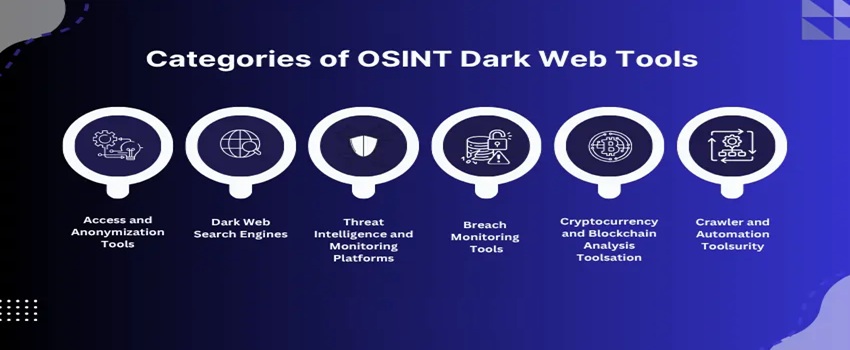
How Onion Links Are Categorized
Categories provide the basic structure of a directory. Depending on the resource, categories may include search and discovery tools, privacy services, communities, forums, informational resources, or other types of onion services.
Good categorization helps visitors understand what type of resource they are looking at before following a listing. It also makes a large collection easier to navigate than a single undifferentiated list.
How Directory Listings Are Added and Removed
Directory listings can be maintained manually, submitted by users, imported from other sources, or updated by directory administrators. The quality of the directory depends heavily on how listings are reviewed and maintained.
A directory that does not regularly remove outdated information can gradually accumulate broken or inaccurate listings. For that reason, the presence of a link in a directory should never be treated as proof that the destination is currently available or trustworthy.
Why Dark Web Directory Links Go Offline
Onion services are not permanent. A service may shut down, change its address, become unavailable, or stop being maintained. A directory can therefore contain information that was accurate when it was published but is no longer current.
This is one of the most important differences between a directory and a static reference document: directory information has to be maintained if it is going to remain useful.
Directory Listings vs. Individual Onion Sites
A directory is an index. An individual onion site is the destination being indexed. For a broader overview of notable destinations, see our best dark web sites in 2026. Keeping these concepts separate makes it easier to evaluate information and avoid assuming that a directory has verified every destination it mentions.
Types of Dark Web Directories
Not every dark web directory serves the same purpose. Some are broad indexes, while others focus on a specific category or type of resource.
General Onion Site Directories
General directories attempt to organize a wide range of onion services into categories. Their value comes primarily from organization and breadth rather than from the depth of information about any single destination.
Dark Web Search and Discovery Directories
Some directories concentrate on resources used to discover other onion services, including search engines and navigation tools.
Search engines and directories should still be treated as separate resource types: a search engine retrieves indexed results, while a directory organizes known or submitted resources.
Learn more in our dark web search engine guide .
Community and Forum Directories
Community-focused directories organize resources around discussion platforms, forums, and other community-oriented services. These resources can be useful for understanding the broader structure of onion communities without confusing the directory itself with the communities it lists.
For more context, see our article on the structure of Dread communities .
Privacy and Security Resource Directories
Another category consists of directories focused on privacy, anonymity, security, and related educational resources.
These directories can be useful as reference points, but the same evaluation principles apply: a listing should be treated as information about a resource, not as an automatic recommendation.
Cryptocurrency and Financial Resource Directories
Some directories organize resources related to cryptocurrency and privacy-oriented financial technologies. Because information in this area can change quickly, readers should pay particular attention to the age and source of directory listings.
Specialized Onion Directories
Specialized directories may focus on a narrower subject or community. Their smaller scope can make navigation easier, but it also means their usefulness depends heavily on how accurately and consistently the specific category is maintained.
Hidden Wiki and Other Onion Directories
The Hidden Wiki is one of the best-known examples of a wiki-style resource associated with onion-site discovery. The term is also used broadly, however, and different Hidden Wiki-style resources can have different structures, operators, content, and maintenance practices.
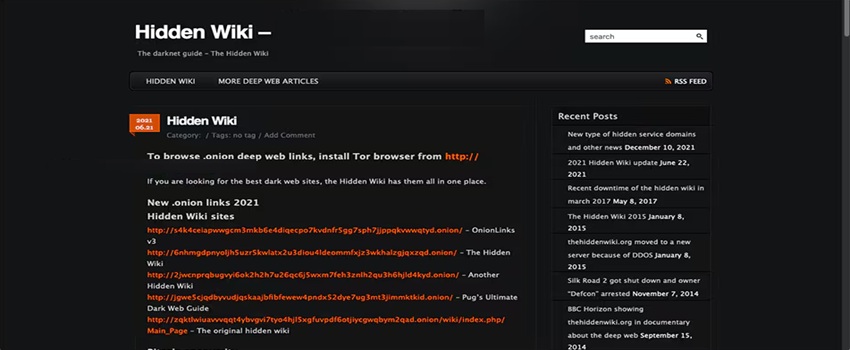
What Is the Hidden Wiki?
In general terms, a Hidden Wiki is a wiki-style collection of information and links associated with onion services. Its defining characteristic is the organization of information into pages and categories rather than a conventional search-engine results page.
How Hidden Wiki-Style Directories Are Organized
Wiki-style directories can organize resources according to broad categories, descriptions, and individual listings. The structure varies between different versions and implementations, so the name alone should not be treated as proof that two resources are operated or maintained by the same organization.
Why Hidden Wiki Links and Mirrors Change
Onion resources can become unavailable or change addresses. Copies, mirrors, archived pages, and unrelated resources can also use similar names. This makes it important to distinguish between the concept of a wiki-style directory and any particular instance of one.
Hidden Wiki Alternatives and Other Directory Models
Hidden Wiki-style resources are only one model of onion-site organization. Other directories may use editorial listings, category pages, search interfaces, or specialized indexes.
The important question is not simply whether a directory uses a familiar name, but how its information is organized, maintained, and presented.
How to Evaluate a Dark Web Directory
A directory should be evaluated as an information source. Its listings can help with discovery, but the directory itself does not automatically establish that every destination is current, authentic, safe, or trustworthy.

Check Whether Listings Are Current
Look for signs that the directory is actively maintained. Old descriptions, broken references, inconsistent categories, and large numbers of unavailable resources can indicate that a directory has not been maintained recently.
Look for Clear Categories and Organization
A useful directory should make it reasonably clear what each category represents and why a particular resource appears there. Clear organization is one of the primary advantages a directory has over an unstructured collection of links.
A Directory Listing Is Not an Endorsement
Being listed does not necessarily mean that the directory operator has verified a destination or recommends it. Treat the listing as a discovery signal rather than a guarantee.
Watch for Fake, Cloned, or Misleading Directories
Familiar names can be copied. A page using the same title or branding as another directory should not automatically be assumed to be affiliated with it.
Do Not Assume Every Listed Onion Site Is Legitimate
A directory can contain outdated, incorrect, user-submitted, or misleading information. Independent evaluation remains necessary even when a resource appears in an established-looking directory.
Why Dark Web Directories Become Outdated
The changing nature of onion services is one of the biggest challenges for directory operators and users alike.
Onion Services Go Offline
A service may simply stop operating. When that happens, an old directory listing can remain online even though the destination no longer responds.
Domains and Addresses Change
Changes to an onion service can make previously published information obsolete. A directory that does not update its listings can therefore accumulate outdated addresses.
Directories Stop Being Maintained
A directory itself can become inactive. When maintenance stops, the directory gradually becomes less useful because its listings no longer reflect the current state of the resources it describes.
Old Listings Can Remain Indexed
Search engines and other sources can continue to discover old directory pages. This is why the publication date or apparent popularity of a directory is not enough to establish that its individual listings are current.
How to Recognize an Outdated Directory
- Large numbers of unavailable or broken listings
- Old descriptions that no longer match the listed resources
- Categories that appear abandoned or poorly maintained
- Repeated duplicate entries
- Missing or inconsistent information
- No apparent evidence of recent maintenance
Dark Web Directories vs. Wikis vs. Search Engines
These terms are sometimes used interchangeably, but they describe different approaches to organizing and discovering information.
| Resource type | Primary purpose |
|---|---|
| Dark web directory | Organized discovery and navigation |
| Wiki | Community or editorial information organized into pages |
| Search engine | Retrieving indexed content based on queries |
| Forum | Discussion and community interaction |
| Individual onion site | The destination or service itself |
Directory vs. Search Engine
A directory presents organized listings, while a search engine returns results based on a query. A directory can therefore be useful when browsing categories, while a search engine is more useful when looking for information matching a specific query.
See our dark web search engine resource for a deeper look at search-based discovery.
Directory vs. Hidden Wiki
A Hidden Wiki-style resource is a particular model of directory or wiki-based navigation. Not every dark web directory is a Hidden Wiki, and not every Hidden Wiki-style resource has the same structure.
Directory vs. Forum
A forum is primarily a community discussion environment. A directory may list forums as resources, but the two serve fundamentally different purposes.
This distinction is particularly useful when researching community structures and understanding where information originates.
Dark Web Directory Navigation and Privacy
Navigating unfamiliar online resources requires careful attention to the information being presented and the source providing it. Directory listings should be treated as references rather than automatic recommendations.
Why Link Verification Matters
An outdated or misleading listing can send visitors to a destination that is unrelated to the resource originally described. Verify information through reliable context before treating a listing as authoritative.
Avoiding Fake or Impersonated Sites
Similar names, copied designs, and misleading descriptions can make resources difficult to distinguish. The identity and provenance of a resource should be considered separately from its appearance in a directory.
Protecting Privacy While Browsing Onion Resources
Privacy and security considerations are particularly important when researching unfamiliar resources. Avoid entering unnecessary personal information and be cautious with downloads, credentials, and external content.
The broader topic of operational security is covered in our operational security and anonymity resources .
Separate Discovery From Trust
One of the most useful principles when using directories is to separate two questions:
- How did I discover this resource?
- Why should I trust this resource?
A directory can answer the first question without answering the second. Keeping those questions separate helps prevent directory listings from being mistaken for verification.
How to Use Dark Web Directories Effectively
The most useful way to approach a directory is as a structured research tool. Start with the category that matches your goal, examine the information provided, and evaluate individual resources independently.
Start With the Category You Need
Category-based navigation can narrow a broad collection of resources into a smaller group that is relevant to the subject you are researching.
Compare Directory Information With Other Sources
When information matters, compare descriptions and availability rather than relying on a single directory listing.
Check Whether Listings Are Current
Look for evidence that the directory is actively maintained and recognize that even a maintained directory can contain individual listings that have changed.
Read the Destination's Own Information Carefully
A directory description is usually a summary. Once you reach a legitimate destination, its own documentation and information should be considered separately from the directory that introduced it.
Treat Directory Listings as Discovery Resources
The safest mental model is simple: a directory helps you discover resources. It does not automatically validate them.
Frequently Asked Questions About Dark Web Directories
What is a dark web directory?
A dark web directory is an organized index of onion services and other resources. Directories generally group listings into categories to make discovery and navigation easier.
Are dark web directories the same as search engines?
No. Directories organize listings into categories, while search engines retrieve indexed information based on user queries. The two can complement each other but serve different primary purposes.
What is the Hidden Wiki?
The Hidden Wiki is a term associated with wiki-style collections of information and links related to onion services. Different resources can use similar terminology, so the name alone does not establish that they are operated by the same organization.
Why do onion directory links stop working?
Onion services can shut down, change addresses, or become unavailable. Directory operators may also stop maintaining their listings, leaving outdated information online.
Are dark web directories trustworthy?
A directory should be treated as an information source rather than a guarantee. A listing does not automatically establish that the destination is current, authentic, safe, or trustworthy.
How are onion sites organized in directories?
Directories commonly group resources by type or subject, such as search, privacy, communities, forums, or informational resources. The exact categories depend on the directory.
What is the difference between a directory and a wiki?
A directory primarily focuses on organizing and discovering resources, while a wiki generally focuses on collaboratively maintained information organized into pages. Some resources combine characteristics of both.
How can I recognize an outdated directory?
Broken listings, obsolete descriptions, duplicate entries, abandoned categories, and a lack of apparent maintenance can all indicate that a directory is outdated.
Dark Web Directory Resources
TorLinks covers several related areas of onion-site discovery and navigation. The following resources provide useful starting points for understanding the broader ecosystem.
Final Thoughts on Dark Web Directories
Dark web directories occupy an important position between users and the wider collection of onion services. Their primary value is organization: they turn an otherwise difficult-to-navigate collection of resources into categories and listings that can be explored more systematically.
At the same time, directories should not be confused with verification systems. Listings can become outdated, services can disappear, and similar names can create confusion between unrelated resources.
The most useful approach is therefore to treat a directory as a discovery and navigation tool, while evaluating individual resources separately.
For search-based discovery, continue with our Dark Web Search Engine guide .