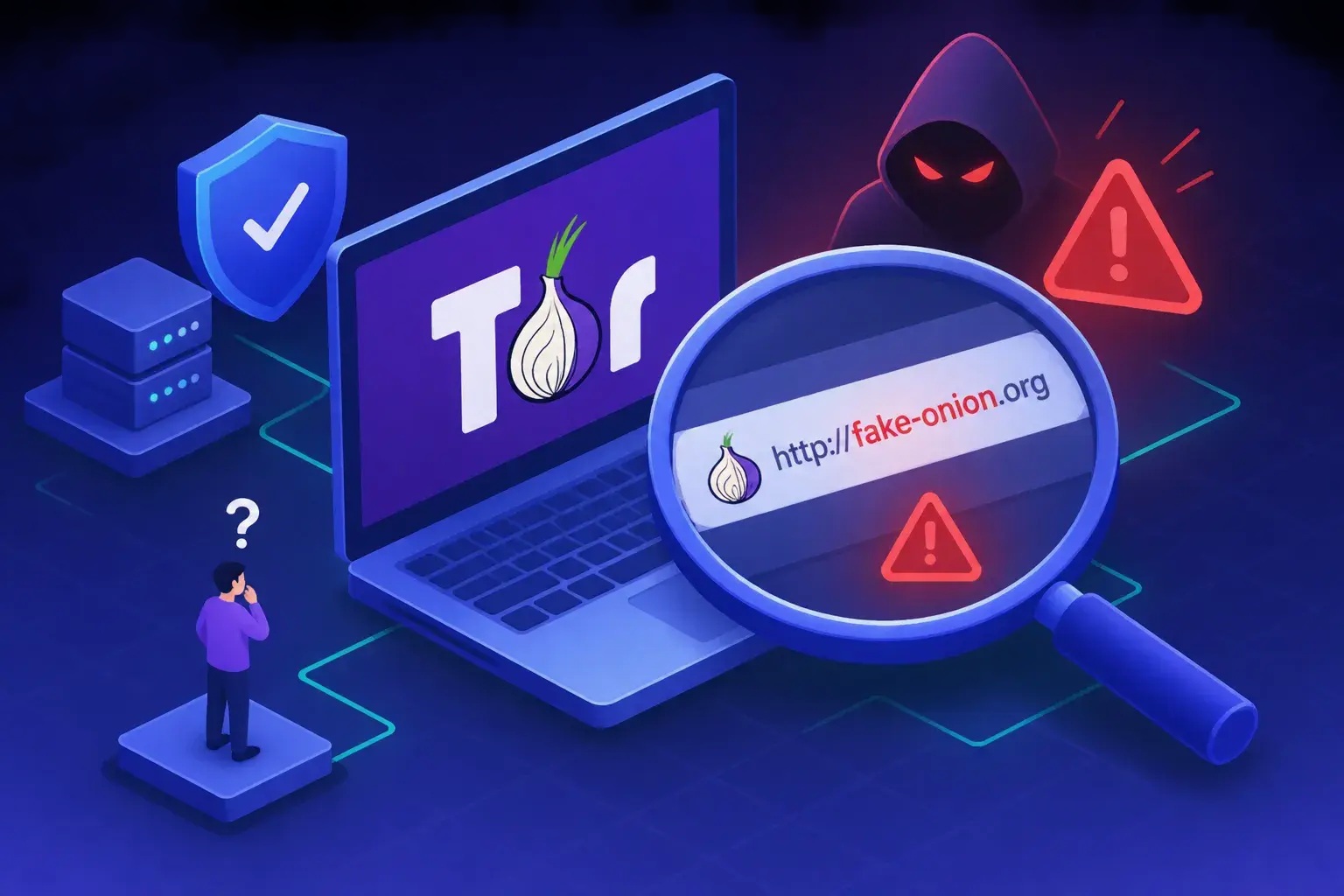
Treat every Tor market link as unverified until you can trace it back to an authenticated source controlled by the service. Compare the full 56-character address, check any PGP-signed announcement against a key you obtained independently, and walk away from anything that pressures you to log in or pay first. Even a link that passes every check doesn't prove a site is legitimate or safe, because verification lowers only one kind of risk.
Tor Links Directory is an online directory of Tor onion links and darknet resources, with categories for markets, vendors, forums, search engines and directories. In this article, we’ll use it as a guide while you learn to explore the territory for yourself.
It’s natural to trust a link when it looks legitimate but that’s exactly the instinct we’ll unpack, step by step. This article explains how to assess links and reduce risk. It does not encourage buying illegal goods.
Key Takeaways
- Valid isn't trustworthy: A phishing mirror can have a perfectly valid onion address. Tor verifies that the address matches a cryptographic key, not that the operator is>
- Listings are leads: A directory entry is just a starting point, it doesn’t prove that an onion address is legitimate.
- Official sources win: Start with the service's HTTPS website and verify PGP signatures using a public key obtained independently.
- Urgency is a warning: If you’re asked to log in again, verify your account, or pay upfront, treat it as a red flag and close the page.
- Risk remains: A verified address doesn't remove privacy or legal exposure.
How do onion addresses work, and what makes it so easy to create convincing fakes?
An onion address is generated using a service's own cryptographic key pair. This means anyone can create a valid onion service address without requesting permission from a domain registrar or central authority. While this design supports Tor's decentralized architecture, it also makes fake Tor market links relatively easy and inexpensive to create.
What Is a V3 Onion Address?
A modern onion address consists of 56 letters and numbers followed by .onion. It’s derived from the service’s key pair, not assigned by a domain registrar. The older, 16-character v2 addresses have been retired.
A v3 onion address encodes information derived from the service's public key, making it self-authenticating. Learn how v3 Tor onion addresses are generated. Tor can verify that you have connected to the service associated with that address, but it cannot establish whether that service is the one you originally intended to visit.
The difference between an authentic address and the right website
This is where people get tripped up: a phishing mirror has a valid address of its own, so Tor connects without a fuss. The cryptography confirms that the address matches the key; it doesn’t tell you whether the operator can be trusted.
There’s no padlock-style reassurance here. The signal that looks like a safety check answers a much narrower question than most people realize.
Why Doesn't Tor Have a Master Directory of Onion Services?
Tor doesn’t have a public, Google style index of onion services in part because it’s built to make them hard to enumerate. People rely on third party onion directories and tor search engines to fill the gap, but those listings can be outdated or malicious.
Where do Tor market directories get their links, and how far should you trust them?
Tor market directories and onion search engines collect addresses from publicly available sources, including websites, forums, operator submissions, and other directories. These listings can help with discovery, but they should be treated as starting points rather than proof that an onion address is genuine. No directory has a complete or authoritative view of the Tor network.
How Do Onion Directories and Search Engines Collect Addresses?
Onion directories and search engines commonly rely on several collection methods:
- Seed-and-follow crawling: Crawlers begin with known onion pages and follow links to discover additional services.
- Operator submissions: Website operators submit their onion addresses for inclusion in a directory.
- Forum and directory harvesting: Addresses are collected from public discussions, forums, and existing onion link collections.
- Manual curation: Editors review and organize submitted addresses into categories.
Research on onion service discovery and crawling illustrates how crawlers start with known pages and follow available links. Consequently, services that are not linked from discovered pages may remain invisible to these systems. Some crawlers also prioritize addresses embedded in HTML links, potentially overlooking onion addresses published as plain text.
Why an Onion Directory Listing Is a Lead, Not a Verdict
Unmoderated lists mix real, dead, and malicious entries. Services come and go, change addresses, and spawn mirrors. Careful directories recheck links, drop dead entries, and label mirrors. More carefully maintained directories may periodically recheck submitted links, remove inactive entries, and identify known mirrors.
Where Tor Links Directory fits
Tor Links Directory groups onion resources into categories such as markets, vendors, forums, search engines and other directories. This makes it easier to find a relevant starting point than working through an unsorted list.
Still, a directory is only a starting point not a substitute for checking links yourself. Comparing multiple onion link collections gives you more sources to cross check, so it’s worth consulting other directories as well.
What Are the Red Flags of a Phishing Mirror?
A phishing mirror usually reveals itself Learn how v3 Tor onion addresses are generated through its address, its announcement, or its behavior. Here is a checklist you can scan quickly:
- A short or brand-like address, or one that differs from a known address by a single character.
- A link that appears in only one place.
- A sudden "new mirror" notice claiming the old address was seized.
- A PGP signature that fails or uses an unfamiliar key.
- Pressure to log in, "re-verify," or update bookmarks.
- Payment demanded before access, or requests to pay outside the platform.
- Requests for passwords, recovery phrases, or private keys.
- Blurry logos, broken links, or a login form as the only working feature.
What to Do the Moment Something Feels Off
Stop and leave the page. Don't log in, reuse a password, download files, or send cryptocurrency. If you can't verify a signature, treat the link as untrusted.
The urge to "just check one more thing" is how many people get caught. Curiosity feels harmless, but it is the opening a clone needs.
How Can You Check Whether an Onion Address Is Current and Authentic?
Follow the address back to the service’s official, authenticated sources. A directory may help you find them, but it isn’t proof on its own.
Start From the Official HTTPS Site
Open the site from a trusted bookmark or type its address directly don’t use a search result. Check the help pages, security information, or footer for its onion address. In Tor Browser, look for the “.onion available” prompt. It appears when the HTTPS site shares its onion address via the Onion Location header.
Compare the Whole Address and Verify Signatures
Check all 56 characters, especially the ending, not just the recognizable prefix. If a signed announcement exists, verify the PGP signature with a public key you obtained independently. Then confirm the fingerprint matches previously trusted announcements.
A "Good signature" result shows the message wasn't altered and was signed by that key. It doesn't prove the key belongs to the operator, which is why independent sourcing matters.
What Does Not Count as Proof?
A matching logo, a search result, a directory listing even ours and a checksum that checks out still aren’t enough. An EV certificate can boost confidence, but not having one doesn’t automatically mean it’s fraud.
- A matching logo or website design.
- A search-engine result.
- A directory listing, including ours.
- A checksum that appears correct.
- An EV certificate or other reassuring website indicator.
An EV certificate may provide additional information, but its absence is not automatic evidence of fraud.
Checking Freshness
Cross check the address across two or three independent sources, and note when a directory last rechecked it if it says. Expect dead or changed addresses. Tor Links Directory can serve as one of those sources, but never the only one.
The Verification Process: A Quick Overview
- Open the service's official HTTPS site using a previously trusted source.
- Look for its published onion address or the ".onion available" prompt.
- Check the complete 56-character address against independently published information.
- Verify any PGP-signed announcement using an independently obtained public key.
- Cross-check the information against two or three independent, reputable sources.
What Privacy and Legal Risks Remain Even After a Link Checks Out?
Plenty remain. A verified address means you have stronger evidence that you reached the intended service, and nothing more.
Verification Is Not a Safety Guarantee
It does not mean the market is honest, safe, or lawful. Exit scams, malware, and compromised infrastructure can all exist behind genuine addresses.
Privacy considerations that Tor alone doesn't solve
Anonymity isn’t guaranteed. Traffic analysis, blockchain tracing, device fingerprints, reused usernames, and even writing style can reveal who you are. Keep Tor Browser up to date, avoid downloading files, and never reuse credentials or personal details.
You can also use Tor alongside other privacy tools. Tor Links Directory’s tools and VPN categories are useful places to compare your options.
Legal Exposure and a Sensible Boundary
Accessing the dark web is legal in many places, but buying, selling, or facilitating illicit goods or services generally isn't. The risks include prosecution, facilitation liability, computer-crime offenses, cross-border complications, and exchanges freezing funds. Some markets or vendor accounts may also be monitored.
The sensible boundary is not to purchase, sell, or download illicit material. If you research this space, use controlled environments and get legal guidance.
Verify Slowly, Trust Sparingly, and Start From a Curated Map
Addresses prove keys, not intentions. Phishing mirrors thrive on urgency, and your best defenses are official sources and signatures you verified yourself.
No check can eliminate risk, so keep verifying even when an address looks familiar. Treat every Tor market link as unverified until you’ve confirmed it through an independent source.
Tor Links Directory’s categorized listings can be a useful starting point, but always verify a link independently before trusting it.
Frequently Asked Questions
Does a valid onion address mean a site is legitimate?
No, a valid onion address does not mean a site is legitimate. Tor confirms that the address matches the service's key, but a phishing mirror can have a valid address of its own.
What should you do if an onion site asks you to re-verify your account?
Close the page if it unexpectedly pressures you to re-verify your account. Don't enter credentials, reuse a password, download files, or send cryptocurrency. Verify the service through independently trusted sources instead.
Does a good PGP signature prove an onion address is trustworthy?
No. A valid PGP signature by itself doesn’t prove an onion address is trustworthy. It only confirms that the message hasn’t been tampered with and was signed by that key. You should also get the key from an independent source and compare its fingerprint with one shared in a trusted announcement.
Can you rely on a directory listing if the onion address looks familiar?
No, you should treat a directory listing as a lead, even if the address looks familiar. Compare all 56 characters with the address advertised by the service and cross-check it across two or three independent sources.